You open your phone, and a friend has texted, “Today was ⛈️.” No explanation needed. You already know it was a rough, chaotic or emotional day.
That is the power of the thunderstorm emoji. With one small symbol, it can describe real weather, a stormy mood, or a week that felt like too much. But is it always about rain and lightning? Not quite. The thunderstorm emoji meaning changes with the context, the platform and even the emojis placed next to it.
In this guide, you’ll learn what ⛈️ means, where it came from, how it looks on different devices, and how it differs from similar storm emoji like 🌩️ and ⚡. You’ll also find the best emoji combinations, captions and tips for using it well.
Let’s dive in.
What Is the Thunderstorm Emoji?
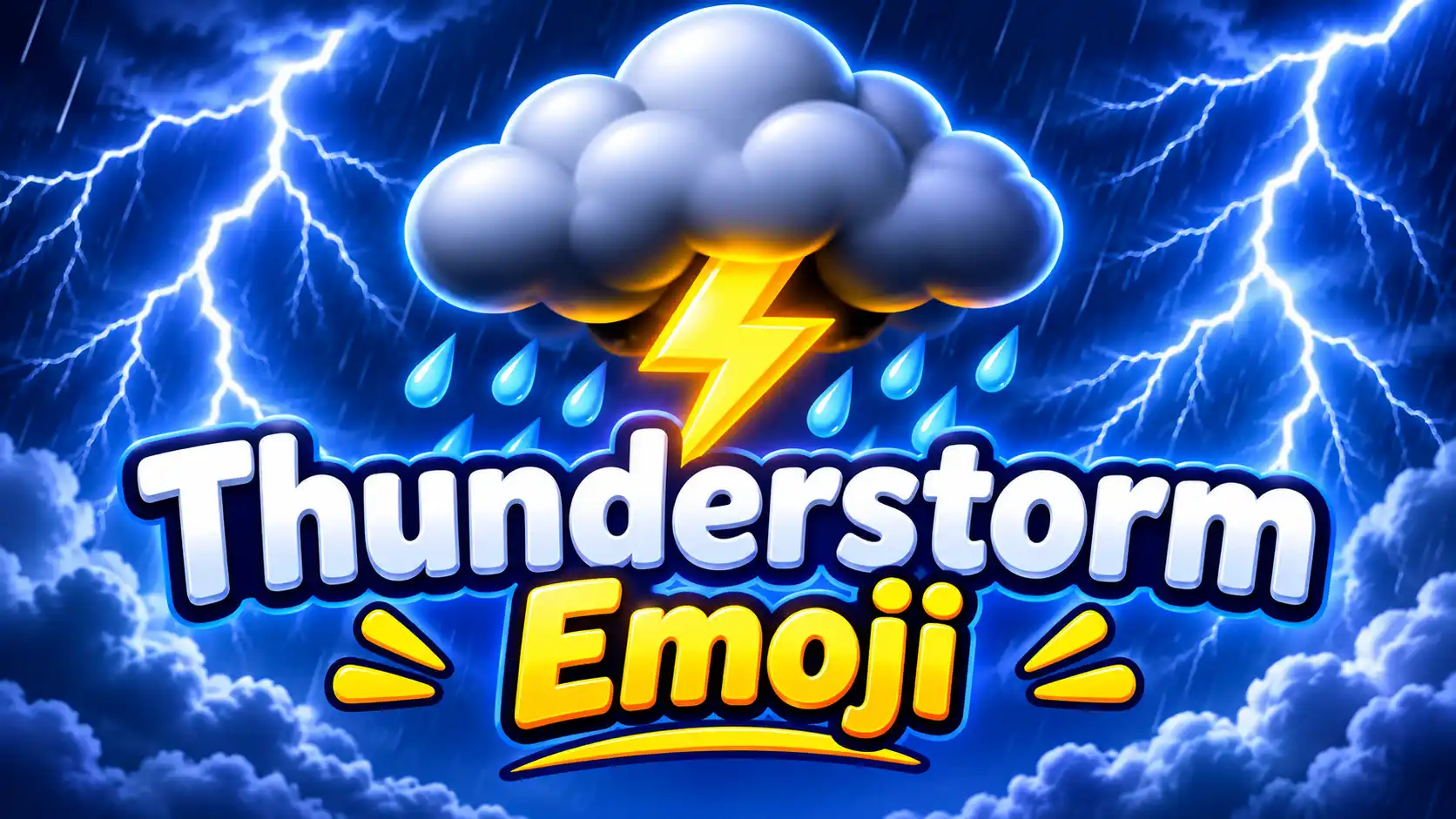
The thunderstorm emoji ⛈️ shows a dark storm cloud with a lightning bolt and rain falling beneath it. It’s one of the most dramatic weather emoji available, which is why people use it for both real storms and strong feelings.
Official Name and Code
Its official Unicode name is “Thunder Cloud and Rain,” though many platforms label it “Cloud with Lightning and Rain.” Here are the key details:
- Emoji: ⛈️
- Unicode codepoint: U+26C8
- Common shortcode: :thunder_cloud_and_rain:
- Category: Travel & Places, in the weather group
Related Storm Emoji
⛈️ belongs to a family of weather emoji, and each one has a slightly different job:
- 🌩️ Cloud with Lightning: lightning without rain, often used for tension or suspense
- 🌧️ Cloud with Rain: a calmer rainy day or a sad mood
- ⚡ High Voltage: energy, speed or a sudden idea
- 🌪️ Tornado: chaos or extreme situations
Why It Stands Out
Unlike the others, ⛈️ combines thunder, lightning and rain in a single symbol. That makes it the strongest choice when you want to show a full storm, whether it’s literal weather or an emotional storm in your day.
A Short History of the Thunderstorm Emoji
The story of the thunderstorm emoji begins in Japan. In the late 1990s, emoji first appeared on Japanese mobile phones, and the early sets included simple weather symbols like the sun, clouds, rain and umbrellas. Weather was a natural fit, because people used these symbols to share quick forecasts and moods in short messages.
Joining Unicode
As emoji spread, the need for a global standard grew. The Unicode Consortium began adding emoji characters so that a symbol sent from one phone would display correctly on another. The ⛈ symbol, U+26C8, was added to Unicode in 2009 as part of a block of miscellaneous symbols, and it was later recognized as a full emoji. Its cousin 🌩️ followed in 2014.
The Variation Selector
Because ⛈ started life as a text symbol, some systems show it as a plain black-and-white icon. A hidden variation selector (U+FE0F) tells the device to display the colorful emoji version instead. That is why you’ll often see it written as ⛈️.
Spreading Across Platforms
Once emoji keyboards arrived on Apple, Google, Samsung and Microsoft devices, each company drew its own version of the storm cloud. Today ⛈️ works on nearly all smartphones, social media apps and messaging platforms.
Design Across Platforms
The thunderstorm emoji doesn’t look the same everywhere. Unicode decides what the emoji means, but each company draws its own version. That is why the same ⛈️ can feel calm on one phone and dramatic on another.
How Major Platforms Draw It
- Apple (iPhone): a detailed, polished dark cloud with a bright lightning bolt and raindrops. It usually looks the most realistic and intense.
- Google (Android): a softer, more cartoon-style design with a rounded cloud and simple shapes.
- Samsung: a stylized look with bold colors and clear outlines, often brighter than other versions.
- Microsoft (Windows): a clean, modern design that has changed over the years as Windows updated its emoji set.
- WhatsApp, X (Twitter) and others: each uses its own flat or semi-realistic style, so the storm can look quite different.
Why It Matters
The design can change the tone of your message. A soft, friendly cloud may read as a cozy rainy day, while a dark cloud with a sharp bolt may feel like anger or stress. Since your friend may be on a different device, they might not see exactly what you sent.
Rendering Quirks
- Older devices may show a plain black-and-white symbol or an empty box.
- Some apps swap in their own emoji artwork.
- Updates can change how the emoji looks, so it’s worth rechecking before you publish.
Suggested visual: add a side-by-side comparison image of ⛈️ on each platform. (Check current designs on Emojipedia, since platforms update their artwork often.)
The Literal Meanings of the Thunderstorm Emoji
Before it became a symbol for moods and drama, the thunderstorm emoji had one simple job: to show real weather. In its most literal sense, ⛈️ means there is a storm with thunder, lightning and rain.
Talking About Real Storms
The most common literal use is sharing what is happening outside. A quick message like “Heavy storm tonight ⛈️” tells people what to expect without any extra explanation. It works well for daily updates, travel plans and weather chats.
Weather Apps and Forecasts
Weather apps, news channels and forecast pages often use ⛈️ to show a thunderstorm forecast. If you see it on a weekly forecast, it usually means storms are likely that day.
Warnings and Safety
The emoji is also useful for storm warnings. People use it to share:
- Severe weather alerts in their area
- Power outages caused by storms
- Flight delays and canceled events
- Road conditions and travel warnings
Since storms can be dangerous, it’s best to pair the emoji with clear words when safety is involved. For example, “Storm warning in our area ⛈️ Stay indoors” is much clearer than the emoji alone.
When to Use the Literal Meaning
Use ⛈️ literally when:
- You are describing actual weather
- You are sharing a forecast or alert
- You want to explain why plans changed
In the next section, we’ll move beyond the weather and explore the figurative meanings that make this emoji so popular in everyday conversation.
The Figurative Meanings of the Thunderstorm Emoji
Beyond the weather, ⛈️ has become one of the most expressive emoji for emotions and situations. People use it as a shortcut for feelings that are hard to explain in words.
Mood and Emotion
The most common figurative meaning is a stormy mood. Sending “Today was ⛈️” can mean you feel angry, sad, overwhelmed or just drained. It works because everyone understands that a storm feels heavy, loud and hard to ignore.
Drama and Tension
⛈️ is also popular for drama. It can hint at an argument, bad news or a conflict that is about to break out. Phrases like “storm brewing” or “trouble ahead” fit this use perfectly.
Work and Life Stress
When life gets chaotic, the emoji fits well:
- A packed week of deadlines
- A busy day where everything goes wrong
- A stressful period in school, work or family life
Power and Intensity
Not every storm is negative. ⛈️ can also show power, energy and intensity, such as a powerful performance, a big reveal or a bold comeback.
The Cozy Side
Many people also link storms with comfort. ⛈️ can mean a cozy rainy day, staying home with tea, a book or a movie while the weather rages outside.
Humor and Exaggeration
Finally, people use it for humor. Calling a small problem a ⛈️ moment, like a slow Wi-Fi connection or a missed bus, adds playful drama to a message.
Cultural and Literary Roots
The thunderstorm emoji feels so expressive because humans have used storms as symbols for thousands of years. ⛈️ didn’t invent this meaning. It inherited it.
Storms in Myth and Religion
Many cultures linked thunder and lightning with powerful beings:
- Zeus in Greek mythology hurled lightning bolts
- Thor in Norse mythology controlled thunder
- Indra in Hindu tradition was the god of storms and rain
- Raijin in Japanese tradition was the god of thunder
- Shango in Yoruba tradition was linked with thunder and lightning
In these stories, a storm was a sign of divine power, anger or judgment.
Storms in Literature
Writers have long used stormy weather to mirror human emotion. Shakespeare’s King Lear places a raging storm alongside the king’s madness, and Macbeth opens with thunder and lightning to set a mood of dark forces. This technique is so common that it has a name, the pathetic fallacy, where weather reflects a character’s inner feelings.
Storms in Film and Music
Movies often use thunder before a dramatic twist, a confrontation or a turning point. Songs and poems also use rain and storms for heartbreak, longing and change.
From Culture to Emoji
When people started texting, they carried these ideas with them. A storm still means emotion, tension and power, only now it fits in a single character. So when you send ⛈️, you are using a symbol with ancient roots.
⛈️ vs. Its Look-Alikes
The thunderstorm emoji has several close cousins, and choosing the wrong one can change the tone of your message. Here is how they compare.
Quick Comparison
| Emoji | Name | Best For |
| ⛈️ | Thunder Cloud and Rain | A full storm, heavy emotion, chaotic days |
| 🌩️ | Cloud with Lightning | Tension, suspense, a storm about to start |
| ⚡ | High Voltage | Energy, speed, sudden ideas, power |
| 🌧️ | Cloud with Rain | Sadness, calm rain, cozy moods |
| 🌪️ | Tornado | Extreme chaos, destruction, out-of-control situations |
When to Choose Each One
- Use ⛈️ when you want the full effect: thunder, lightning and rain together. It’s the best pick for a rough day or a dramatic moment.
- Use 🌩️ when something is building but hasn’t broken yet, like an awkward silence before an argument.
- Use ⚡ for positive energy, such as a fast win, a bright idea or a powerful move. It rarely feels gloomy.
- Use 🌧️ for a softer mood. It works for quiet sadness or a peaceful rainy day.
- Use 🌪️ when things feel truly out of control, beyond a normal storm.
Avoid Tone Mistakes
Sending ⛈️ for a small problem can feel too dramatic, unless you’re joking. In a serious or professional message, a gentler choice like 🌧️ may fit better. Likewise, ⚡ can feel too cheerful if you want to show a bad mood.
Emoji Combos and Phrases
On its own, ⛈️ already says a lot. Paired with other emoji, it becomes even more specific. Here are some combinations you can use in messages, captions and bios.
Popular Combos
| Combo | Meaning |
| ⛈️🏠 | Stuck indoors because of the storm |
| ⛈️☕ | A cozy storm day with a warm drink |
| ⛈️📚 | A stormy study session or reading day |
| ⛈️🎧 | A moody playlist or rainy-day music |
| ⛈️😤 | Anger or frustration |
| ⛈️😭 | Sadness or an emotional day |
| ⛈️💻 | A stressful workday or deadline storm |
| ⛈️🌈 | Hope after a hard time |
Caption Ideas
- “Let the storm roll in ⛈️”
- “Rainy day mood, cozy soul ⛈️☕”
- “After the storm comes the calm ⛈️🌈”
- “Born in the storm, stronger every day ⛈️”
- “Monday energy: pure thunder ⛈️💻”
Bio and Username Ideas
- “Storm chaser ⛈️”
- “Calm in the chaos ⛈️”
- “Thunder in my mind, peace in my heart ⛈️”
- “Rain lover ⛈️🎧”
Writing Tips
- Keep combos short. Two or three emoji are usually enough.
- Match the emoji to your tone. ⛈️🌈 feels hopeful, while ⛈️😤 feels tense.
- Place the emoji at the end of a sentence for a natural look.
Tip: for social media posts, a storm emoji paired with a short, poetic line often gets more attention than a long caption.
Using the Thunderstorm Emoji Well
Knowing what ⛈️ means is one thing. Using it well is another. Here is how to get the right effect in different situations.
Social Media
On platforms like Instagram, X and TikTok, ⛈️ works best in captions, stories, bios and hashtags. Pair it with a short line or a mood-based post. It also suits weather updates, music posts and aesthetic content.
Messaging
In chats with friends, ⛈️ can say a lot in a single character. To avoid misreads, add a few words when your meaning might be unclear. “Rough day ⛈️” is clearer than the emoji alone.
Professional Settings
In work emails and formal messages, use it sparingly, if at all. It can work in a friendly team chat (“Storm delay today ⛈️”), but it may feel too dramatic in a serious or client-facing message.
Brands and Content Creators
The emoji suits many niches:
- Weather pages and news updates
- Music and playlist creators
- Book and lifestyle bloggers
- Gaming and entertainment content
Accessibility
Screen readers read emoji aloud by their official name, so a long string of ⛈️⛈️⛈️⛈️ can be tiring for someone listening. Use one or two emoji, and place them at the end of a sentence so the message still makes sense.
Quick Rules
- Match the emoji to your tone and audience.
- Use it with clear words for important information.
- Don’t overuse it, or it loses its impact.
Common Mistakes to Avoid
Even a simple emoji can cause confusion if it’s used the wrong way. Here are the most common thunderstorm emoji mistakes and how to fix them.
1. Choosing the Wrong Storm Emoji
Using ⛈️ when 🌩️ or ⚡ fits better can change your message. If you want to show building tension, 🌩️ is often the better pick. If you mean energy or a bright idea, choose ⚡.
2. Overusing It
A string like ⛈️⛈️⛈️⛈️⛈️ can look spammy and loses its impact. It can also be tiring for screen reader users. One or two emoji are usually enough.
3. Assuming Everyone Sees the Same Design
The emoji looks different on Apple, Google, Samsung and Microsoft devices. A cloud that looks cozy on your phone may look darker or more intense on someone else’s, so keep your message clear with words.
4. Being Too Dramatic
Sending ⛈️ for a minor problem can feel exaggerated, unless you’re clearly joking. In serious or professional messages, a gentler choice like 🌧️ may fit better.
5. Mixing Up Literal and Figurative Meanings
If you send “Big ⛈️ today” without context, people may wonder whether you mean real weather or a bad mood. Add a few words to avoid confusion.
6. Using It Alone for Safety Information
For storm warnings, outages or travel alerts, don’t rely on the emoji alone. Always include clear text so nothing is misunderstood.
Quick Fix Checklist
- Pick the emoji that matches your exact mood.
- Use one or two, not a long chain.
- Add context when the meaning could be unclear.
Fun Section: Play With the Storm
Now let’s lighten the mood. Here are a few fun extras your readers can enjoy.
Quick Trivia
- Emoji comes from Japanese: e means “picture” and moji means “character.”
- ⛈️ began as a text symbol before it became a colorful emoji.
- You can estimate how far a storm is by counting the seconds between lightning and thunder. Divide by 3 for kilometers or by 5 for miles.
Which Storm Emoji Are You?
| Your Vibe | Your Emoji |
| Calm, thoughtful, loves quiet days | 🌧️ |
| Always buzzing with ideas | ⚡ |
| Intense, emotional, impossible to ignore | ⛈️ |
| Mysterious, builds suspense | 🌩️ |
| Pure chaos, and proud of it | 🌪️ |
Invite readers to share their result in the comments.
Surprising Ways to Use ⛈️
- Playlist titles: “Thunder Days ⛈️🎧”
- Study or work stories: “Deadline storm ⛈️💻”
- Book reviews: a dark, dramatic read gets ⛈️
- Game streaks: a big comeback after a rough start
- Cozy posts: ⛈️ plus tea for a rainy-day mood
Reader Poll
End the section with a question: “What does ⛈️ mean to you: real weather, a rough day, or pure drama?” Polls and questions like this encourage comments and keep readers engaged.
FAQ
What does the thunderstorm emoji mean?
The thunderstorm emoji ⛈️ literally means a storm with thunder, lightning and rain. Figuratively, it can show a rough mood, a dramatic situation, a stressful day or a cozy rainy-day feeling, depending on the context.
What is the difference between ⛈️ and 🌩️?
⛈️ shows a cloud with lightning and rain, so it feels like a full storm. 🌩️ shows lightning without rain, which often suggests tension or a storm that is about to start.
What is the Unicode for the thunderstorm emoji?
The Unicode codepoint is U+26C8, and its official name is “Thunder Cloud and Rain.” A hidden variation selector (U+FE0F) makes it display as a colorful emoji.
How do I type the thunderstorm emoji?
- iPhone and Android: open the emoji keyboard and search “thunder” or “storm.”
- Windows: press Windows key + . (period) and search for it.
- Mac: press Control + Command + Space and search for it.
- Copy and paste: copy ⛈️ directly from this page.
Does the thunderstorm emoji look the same on every phone?
No. Apple, Google, Samsung and Microsoft each draw their own version, so the cloud, lightning and rain can look softer, darker or more cartoonish depending on the device.
Can I use the thunderstorm emoji in professional messages?
Yes, but sparingly. It’s fine for a friendly team chat or a weather delay, but in formal or client-facing messages a gentler emoji, or no emoji, is usually safer.
Conclusion
The thunderstorm emoji may be small, but it carries a lot of meaning. Literally, ⛈️ shows a real storm with thunder, lightning and rain. Figuratively, it can express a rough mood, a dramatic moment, a stressful day or even a cozy rainy-day feeling.
Throughout this guide, we explored the emoji’s history, how its design changes across platforms, how it differs from look-alikes like 🌩️ and ⚡, and the best combinations for captions and messages. We also covered the mistakes to avoid, such as overusing it or relying on it alone for important information.
The key takeaway is simple: choose the emoji that matches your exact mood, and add a few words when the meaning could be unclear. Used with care, ⛈️ can make your messages more expressive, relatable and fun.
Now it’s your turn. What does ⛈️ mean to you? Share how you use it in the comments, and check out our other emoji guides for more tips.

Hi, I’m Benjamin Dreyer. 😊 I enjoy exploring the world of emojis and digital communication, making emoji meanings and expressions simple to understand. At Defineexa.com, I write about emojis, their meanings, text abbreviations, acronyms, and internet slang. My goal is to provide clear, accurate, and easy-to-read explanations that help readers understand what different emojis and online expressions mean, how they’re used, and how they can communicate with confidence in everyday conversations. 💬