You hit send, and a second later you realize the message went to the wrong person. The only reaction that fits is 😬.
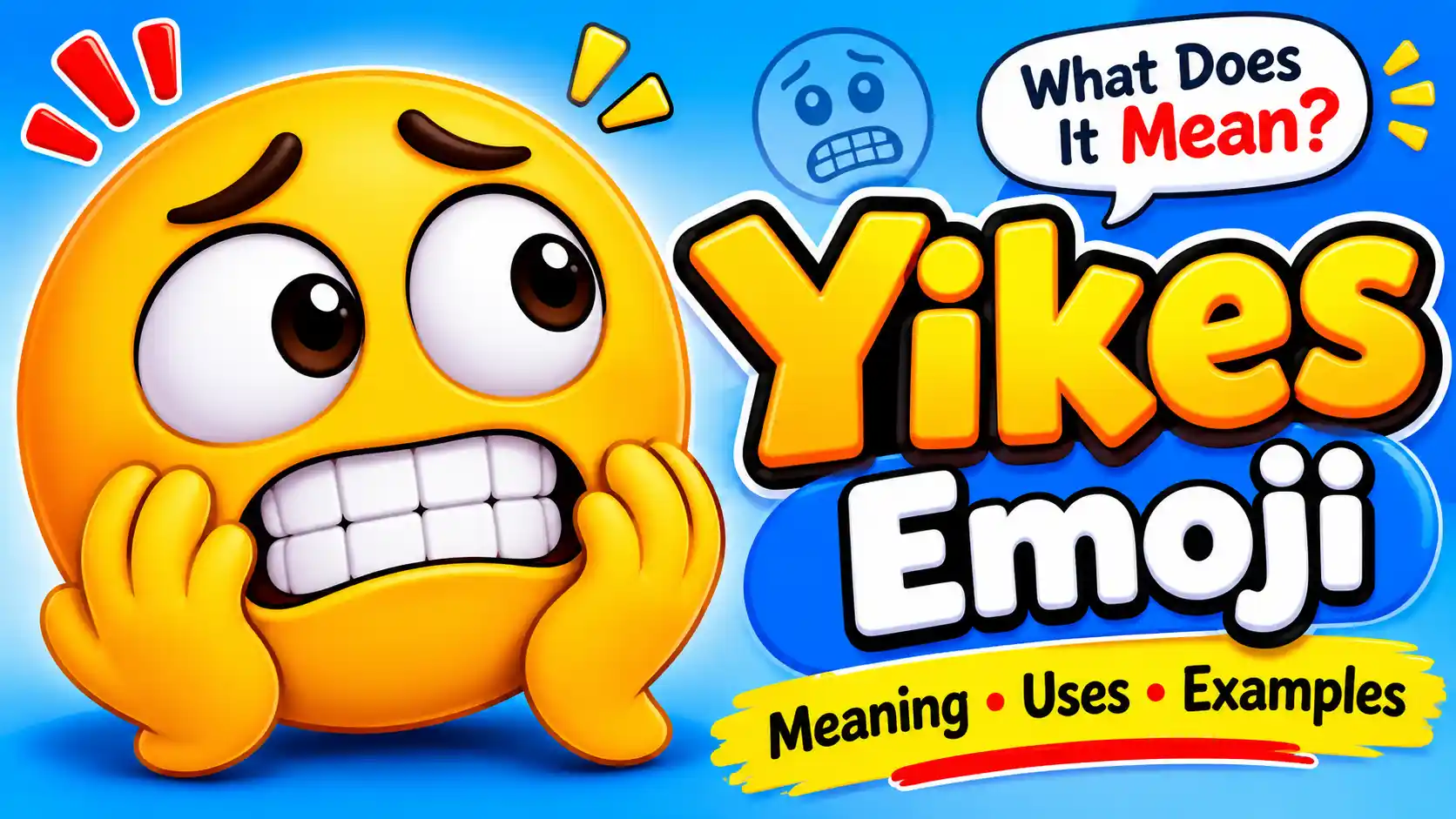
That tense, teeth-baring face is the yikes emoji, officially called the Grimacing Face. It shows awkwardness, nervousness, embarrassment, or a quiet “that’s not good,” and people use it to soften bad news, admit a mistake, or react to a cringe-worthy moment without writing a single word.
But the 😬 meaning isn’t always obvious. Depending on tone, context, and even the phone it appears on, it can read as playful, sympathetic, or passive-aggressive. This guide covers what it means, where it came from, how to use it, how it differs from similar emojis, and when to leave it unsent.
Quick Facts About the Yikes Emoji
| Detail | Info |
|---|---|
| Official name | Grimacing Face |
| Nicknames | yikes emoji, awkward emoji, cringe emoji |
| Unicode code point | U+1F62C |
| Shortcode | :grimacing: |
| HTML entity | 😬 |
| Unicode version | 6.1 (2012) |
| Emoji version | 1.0 (2015) |
| Category | Smileys & Emotion (face-neutral-skeptical) |
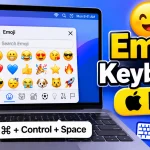
How to type it: on Windows, press Win + . (period); on Mac, press Control + Command + Space; then search “grimace.” On iPhone and Android, open the emoji keyboard and search “grimacing.” In Slack and Discord, type :grimacing:. Or copy it from here: 😬
What Does the Yikes Emoji Mean?
At its simplest, 😬 is a visual “yikes.” The clenched teeth, stretched mouth, and wide eyes capture the wince you make when something goes wrong or gets awkward. It signals tension without panic: not outright fear, not sadness, just “oh no, this is uncomfortable.”
Common Meanings
- Awkwardness: a conversation takes a strange turn, or a silence lingers too long.
- Embarrassment: your own slip-ups (“Just called my teacher ‘mom’ 😬”) or someone else’s.
- Nervousness: before an interview, a big announcement, or a hard conversation.
- Cringe: a bad take, a tone-deaf post, or anything that makes you wince.
- Sympathy: “Ouch, that sounds rough 😬.”
- Apology: “Sorry, I forgot to send it 😬.”
Light or Uneasy?
The tone depends on context. The words around it matter most (“Whoops, my bad 😬” is light, “We need to talk 😬” is not). Other emojis shift it too: paired with 😂 it’s humorous, paired with 😟 it’s more serious. And the relationship counts: it’s playful between close friends but ambiguous from a manager or a stranger.
Origin and History
Grimacing Face was approved as part of Unicode 6.1 in 2012 and added to Emoji 1.0 in 2015. Many neighboring faces arrived with Unicode 6.0 in 2010, so 😬 belongs to the second wave of face emojis. It quickly became shorthand for the “eek” moment, when a mistake or an unfavorable situation has come up.
Few emojis look as different across platforms. According to Emojipedia, some designs show individual teeth while others use a simple white bar, and Microsoft and Facebook use especially wide-eyed expressions. Early Google and Samsung versions had furrowed brows and an angrier look, Samsung’s with puckered lips, and before 2016 Apple’s mouth was the same as the one on 😁. These differences explain why the same message can feel more nervous on one phone and almost like a grin on another.
On Snapchat, 😬 appears next to a contact when you and that person share the same #1 best friend.
How to Use the Yikes Emoji
The 😬 emoji works in almost any chat, but the same face lands differently depending on where you send it and who receives it.
In texts and DMs. This is where 😬 does its best work. Use it to soften bad news (“Running 20 minutes late 😬”), admit a mistake (“I think I sent you the wrong file 😬”), or react to an awkward story (“Wait, he said that to your boss? 😬”). Place it at the end of the sentence, where it signals how you feel about what you just said.
On social media. 😬 works as a quick reaction to a cringe-worthy post or as a caption that sets the mood (“Tried to parallel park in front of everyone 😬”). Audiences are mixed, so add a few words when your meaning might be unclear. A lone 😬 under someone’s post can read as judgment.
At work. In Slack or Teams, it’s fine for light, low-stakes moments (“Heads up, the client moved the deadline 😬”). In formal emails, or messages to clients and senior leaders, skip it and write “Apologies for the delay” instead. If you’re unsure, watch how your colleagues use emojis first.
With friends, family, and strangers. Close friends read it as playful and relatable. Older relatives may take it more literally, and with strangers it can be ambiguous, so add context.
For humor and sarcasm. 😬 is popular for ironic understatement (“Great job on that presentation 😬”). This works between people who know each other well. With someone you don’t know, it can come across as mean.
Example Messages by Tone
- Apologetic: “Sorry, I completely forgot to reply yesterday 😬” (I know I messed up.)
- Nervous: “Interview is in 10 minutes 😬” (I’m anxious.)
- Sympathetic: “You got stuck in traffic for three hours? 😬” (I feel for you.)
- Warning: “Fair warning, the boss is in a mood today 😬” (Be careful.)
- Playful: “Nice singing at karaoke last night 😬” (It was rough, but I’m teasing.)
The words next to 😬 do most of the work, so a short sentence usually makes your message clearer than the emoji alone.
Yikes Emoji vs. Similar Emojis
Several emojis cover awkward or nervous feelings, but each has its own shade.
| Emoji | Name | Feeling | Use it for |
|---|---|---|---|
| 😬 | Grimacing Face | Awkward, “yikes” | Awkward moments, mistakes, secondhand cringe |
| 😅 | Grinning Face with Sweat | Relief, nervous laughter | A close call you can laugh off |
| 😰 | Anxious Face with Sweat | Real worry, stress | Genuine anxiety or pressure |
| 🙃 | Upside-Down Face | Irony, sarcasm | Dry “everything is fine” humor |
| 😳 | Flushed Face | Embarrassment, surprise | Being caught off guard |
| 😟 | Worried Face | Sincere concern | Genuine care for someone |
The most common mix-up is 😬 vs. 😅. 😬 says “that’s uncomfortable,” while 😅 says “phew, that was close.” If it’s still awkward, choose 😬. If you’re relieved, choose 😅. For serious worry, pick 😰 or 😟, since 😬 can sound dismissive when the stakes are high.
Etiquette: Dos and Don’ts
Do:
- Use it for small, low-stakes moments like running late or a minor mix-up.
- Add a few words for clarity. “Sorry, I missed your call 😬” beats the emoji alone.
- Soften bad news with it.
- Match the other person’s style. If they don’t use emojis, think twice.
Don’t:
- Use it for serious or painful news. It can feel dismissive.
- Use it in formal emails to clients or executives.
- Send it alone as a reply to something important.
- Overuse it. Too many grimaces dilute its meaning.
- Mock someone who is struggling. Teasing works only between close friends.
Quick check before you send: Is the situation light enough? Is my meaning clear without the emoji? Does this person usually use emojis? If not, use words instead, such as “yikes,” “oof,” or “that’s awkward.”
Hidden Meanings and Misinterpretations
Because 😬 sits between a wince and a smile, two people can take away different messages.
- Passive-aggressive. The clenched teeth can resemble a strained smile (“Per my last email 😬”). Say what you mean in words.
- A grin or smirk. On designs with wide, bright teeth, a nervous message can look cheerful or smug. Add a phrase like “that’s awkward.”
- Dismissive. A quick 😬 in response to someone’s problem can feel like a shrug. When someone is struggling, write a real message.
- Mockery. Teasing between friends can feel like laughing at someone who’s upset.
- Confused with similar faces. Many platforms use similar teeth on 🥶 (Cold Face), and people often swap 😬 and 😅.
Context clues help: the surrounding words, other emojis (😬😂 reads as humorous, 😬😟 as concerned), and your relationship. When the stakes are high, don’t rely on 😬 alone.
Frequently Asked Questions
What is the official name of the yikes emoji?
The official Unicode name is Grimacing Face (U+1F62C). “Yikes emoji,” “awkward emoji,” and “cringe emoji” are nicknames.
What does 😬 mean?
It expresses awkwardness, nervousness, embarrassment, or a wince at something uncomfortable. People use it to say “yikes” or “oops,” often to soften bad news.
Is the yikes emoji the same as the nervous emoji?
Not exactly. 😬 often signals nervousness, but it also covers embarrassment and secondhand cringe. 😰 is closer to real stress, and 😅 to relieved nervous laughter.
Is the grimacing face emoji rude or passive-aggressive?
Not by default. It’s usually friendly and self-aware, but the clenched teeth can resemble a forced smile, so it can read as passive-aggressive in tense situations. A few clarifying words avoid that.
Can I use 😬 in professional emails?
It’s better to avoid it in formal emails or messages to clients and senior leaders. It can work in casual chats like Slack or Teams. In emails, plain wording such as “Apologies for the delay” is safer.
Why does 😬 look different on my phone?
Each platform (Apple, Google, Samsung, Microsoft, and others) draws its own version, so the teeth, eyes, and overall mood vary.
What does 😬 mean on Snapchat?
It appears next to a contact when you and that person share the same #1 best friend.
Conclusion
The yikes emoji 😬 packs a lot into one small face. It shows awkwardness, nervousness, embarrassment, or a sympathetic wince, and its meaning shifts with the words around it, the person receiving it, and even the device they use.
Use it for light, low-stakes moments, like softening bad news or reacting to a cringe-worthy story. Skip it for serious conversations and formal messages, and whenever your tone could be misread, add a short sentence so the message is clear.

Hi, I’m Benjamin Dreyer. 😊 I enjoy exploring the world of emojis and digital communication, making emoji meanings and expressions simple to understand. At Defineexa.com, I write about emojis, their meanings, text abbreviations, acronyms, and internet slang. My goal is to provide clear, accurate, and easy-to-read explanations that help readers understand what different emojis and online expressions mean, how they’re used, and how they can communicate with confidence in everyday conversations. 💬