A single 😈 can change the whole tone of a message. Send it after “I ate the last slice of pizza,” and it’s a playful confession. Add it to a late-night text, and it turns flirty.
Use 👿 in a heated argument, and it’s a warning. That’s the power of the evil emoji: it’s small, but it carries a lot of attitude.
Evil emojis are a whole family of mischievous and menacing faces, from the smiling devil 😈 and angry devil 👿 to the ogre 👹, goblin 👺, and skull 💀.
Each one has its own tone, and picking the wrong one can send the wrong message. In this guide, you’ll find a quick copy and paste list, the meaning of each evil emoji, how people use them, creative combos, and how to type them on any device.
Evil Emoji Copy & Paste
Select the emoji you want, copy it, and paste it into your message, caption, or bio.
The classic evil emojis
- 😈 Smiling Face with Horns (
:smiling_imp:): playful mischief, teasing, flirting - 👿 Angry Face with Horns (
:imp:): anger, warnings, serious threats - 👹 Ogre (
:japanese_ogre:): monster vibes, scary or dramatic humor - 👺 Goblin (
:japanese_goblin:): mischief, rage, or an “I’m done” mood - 💀 Skull (
:skull:): “I’m dead” laughing, dark humor - ☠️ Skull and Crossbones (
:skull_and_crossbones:): danger, pirates, edgy posts
Smirks and villain faces
- 😏 Smirking Face: sly, smug, or flirty tone
- 😼 Cat with Wry Smile: cheeky, sneaky humor
- 🦹 Supervillain: “villain era” energy, dramatic plans
- 🤡 Clown Face: self-mockery or calling out nonsense
Spooky and dark companions
- 🧛 Vampire, 🧟 Zombie, 👻 Ghost, 🦇 Bat, 🕷️ Spider, 🐍 Snake
- Add-ons that boost the evil vibe: 🖤 Black Heart for dark romance and 🔥 Fire for intensity
Quick tip: for the strongest effect, pair 😈 with 🔥 or 🖤.
What Is the Evil Emoji?
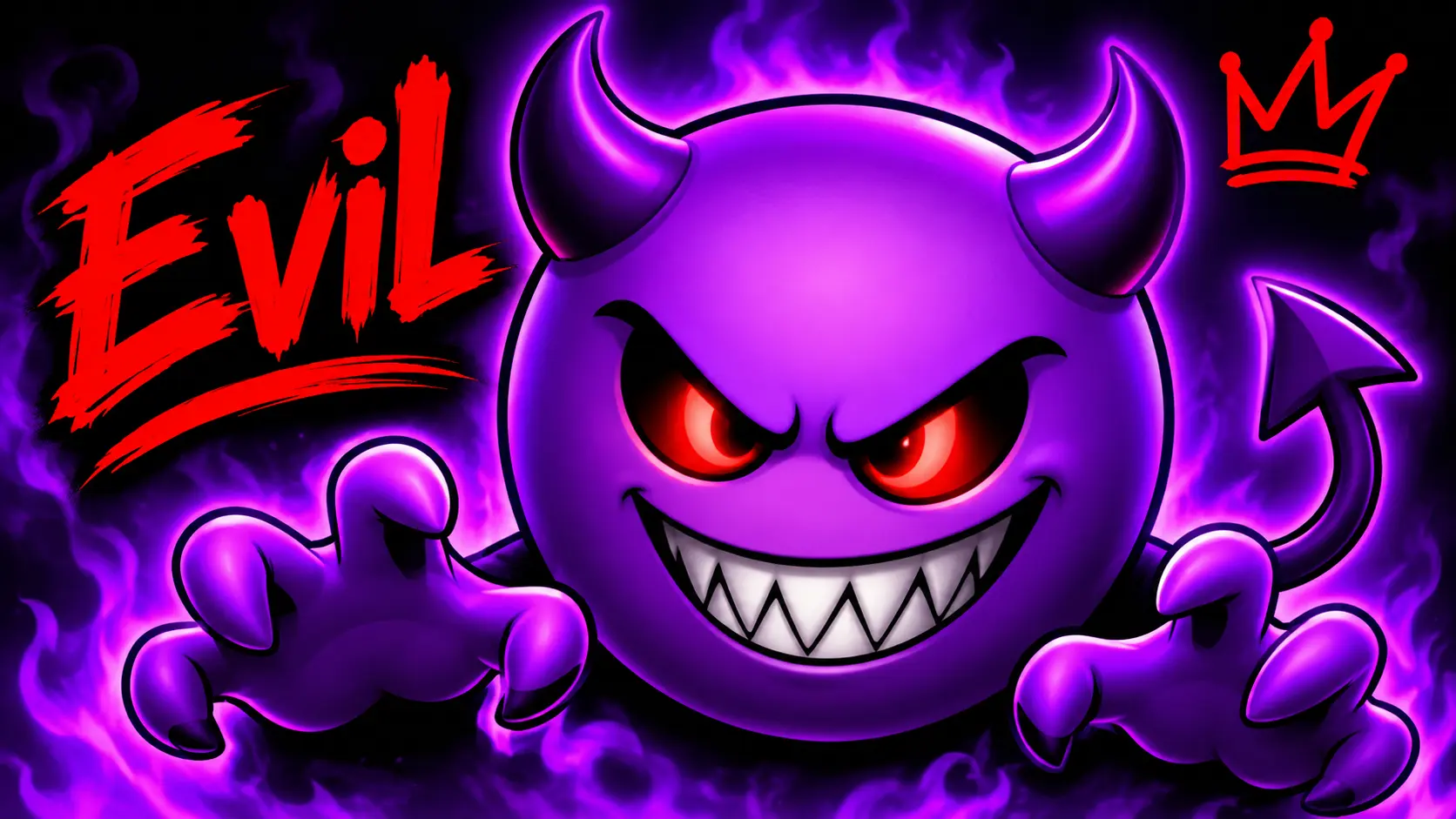
When people say “evil emoji,” they almost always mean 😈, the purple smiling face with horns. It’s the emoji most associated with mischief, temptation, and playful troublemaking. But “evil emoji” is really a nickname for a whole group of devilish and villainous faces, and each one sends a slightly different message.
The official name. The 😈 emoji is officially called Smiling Face with Horns. On many keyboards you’ll also see it labeled “smiling devil,” and its shortcode is :smiling_imp:. The word imp refers to a small, mischievous devil, which is a good clue to the tone: more cheeky than truly sinister.
Technical details. 😈 uses the Unicode code point U+1F608 and the HTML entity 😈. Its angry twin 👿 uses U+1F47F and 👿. Both were added in Unicode 6.0 (2010) and became part of the official emoji set in Emoji 1.0 (2015).
A brief history. Unicode 6.0 was the release that brought hundreds of emojis from Japanese mobile carriers into a global standard. The smiling and angry devils have been paired ever since: one for playful mischief, the other for real anger.
Detailed Meanings of Each Evil Emoji
😈 Smiling Face with Horns
A purple face with a wide grin, arched eyebrows, and small horns. It’s a mischievous imp, not a true villain. People use it for admitting something they shouldn’t have done, flirting, teasing friends, and guilty pleasures like dessert or skipping the gym.
- “Just ordered a second dessert 😈”
- “Wait until you see what I planned for Friday 😈”
Watch out: in a romantic or late-night chat, 😈 is often read as flirty. If you don’t intend that, choose 😏 or 😜 instead.
👿 Angry Face with Horns
A red-purple face with a scowl, furrowed brows, and horns. It’s the angry counterpart of 😈, used for real frustration, warnings, dramatic anger for humor, and gaming trash talk.
- “Who ate my leftovers?? 👿”
- “Update failed AGAIN 👿”
Watch out: without a joking tone, 👿 can come across as hostile, so add humor or context in casual chats.
👹 Ogre
A red demon face with fangs, horns, and a wide-open mouth, based on the oni of Japanese folklore. Use it for monster humor (yourself before coffee), Halloween posts, dramatic rage, and gaming boss fights.
- “Me before my morning coffee 👹”
Watch out: some people see the oni as a cultural symbol, so use it respectfully.
👺 Goblin
A red face with a long nose and angry eyes, modeled on a tengu mask from Japanese folklore, though most people simply call it a goblin. It’s the emoji of “goblin mode” chaos, gremlin humor, frustration, and memes.
- “Eating cereal at midnight in the dark 👺”
💀 Skull
A white human skull, a classic symbol of death and danger. Today its top use is “I’m dead” humor, meaning “this is so funny I can’t breathe.”
- “He really said that out loud 💀”
Watch out: 💀 is rarely meant literally, but it can seem insensitive when someone is sharing bad news. ☠️ leans toward danger and pirates rather than laughter.
😏 Smirking Face
Not technically a devil, but one of the most popular “evil” emojis because it looks smug and scheming. Use it for flirting, “I told you so,” and sarcasm.
- “Guess who got the promotion 😏”
😼 Cat with Wry Smile
The cat version of 😏. Because it’s cute, 😼 is a safe way to be mischievous without sounding flirty or threatening.
- “My cat, every morning at 5 AM 😼”
🦹 Supervillain
A person in a dark hooded cape and mask, drawn as a classic comic-book villain. It exists in several skin tones and gender variations (🦹♂️ and 🦹♀️). Use it for “villain era” posts and self-aware humor.
- “Entering my villain era 🦹”
😈 vs 👿: The Key Difference
At a glance, 😈 and 👿 look almost identical. Both have horns, both are purple, and both are devils. But the expression changes everything. One is a grin, the other is a glare.
- 😈 has a wide grin and raised eyebrows. The mood is playful, mischievous, often flirty, and the intensity is low.
- 👿 has a frown and furrowed brows. The mood is angry or threatening, and the intensity is medium to high.
The same message can mean very different things. “I’m coming over tonight 😈” is playful and maybe flirty, while “I’m coming over tonight 👿” suggests you’re angry and about to have a serious talk. “I saw what you did 😈” is a joking tease, but with 👿 you’re confronting someone.
A simple rule of thumb: smile means 😈 (you’re having fun), frown means 👿 (you’re not). If you’re unsure, 😈 is the safer choice for casual conversation.
Common mistakes to avoid:
- Using 👿 as a joke without any hint of humor. Add 😂 or a playful comment to soften it.
- Using 😈 in a professional chat, where it can read as flirty.
- Assuming both emojis look the same on every platform.
How People Actually Use Evil Emojis
Evil emojis are some of the most versatile symbols on your keyboard. Depending on who sends them and where, they can be funny, flirty, dramatic, or just plain chaotic.
- Playful mischief. The most popular use of 😈: admitting small “crimes” like skipping a workout or eating the last cookie. “Ate dessert before dinner 😈.”
- Flirting. A sly 😈 or 😏 adds a teasing tone, especially in late-night chats. Context matters a lot. “Think you can handle it? 😈🔥”
- Sarcasm and dark humor. 💀, 😈, and 🦹 joke about unfortunate situations. “Presentation is tomorrow and I haven’t started 💀.”
- Gaming and trash talk. Gamers use 😈, 👿, and 👹 to taunt opponents or complain about hard levels. “GG, better luck next round 😈.”
- Social media captions and bios. Evil emojis add attitude on Instagram, TikTok, and X. “Coffee, chaos & a little mischief 😈☕.”
- Halloween and spooky season. October is peak season for 😈, 👹, 💀, 🦇, and 🧛 in costume posts and party invitations.
- Memes and reaction culture. They signal a character who’s a little too pleased with a bad decision. “POV: you found the last slice of cake 😈.”
- Joking with friends and family. Among close friends they are shorthand for inside jokes and harmless pranks. “I’m telling mom you broke the vase 😈.”
When NOT to Use Evil Emojis
A well-timed 😈 can win a laugh, while a badly timed one can cause confusion or offense.
- Professional emails and work chats. 😈, 😏, and 👿 can seem unprofessional or flirty, especially with managers or clients. Try 🙂 or leave the emoji out.
- Serious or sensitive conversations. Never use them when someone is sharing bad news or grieving. Even a joking 💀 can feel insensitive.
- People you don’t know well. Without shared context, a 😈 may feel flirty and a 👿 may feel threatening. Choose friendlier options like 😄 or 😉.
- Older relatives and formal contacts. A 💀 meaning “I’m laughing” could be read literally and cause worry.
- Cross-cultural and religious sensitivities. Some religious communities find devil emojis disrespectful, and 👹 and 👺 come from Japanese folklore, so mocking them can seem culturally insensitive.
- Anything that could look like a threat. “I know where you work 👿” is risky. “I’ll see you at work tomorrow 😄” is better.
- Brand and customer-facing content. Devil emojis clash with banking, healthcare, education, or legal content, though they can work for Halloween campaigns, gaming, and entertainment.
Safer alternatives: use 😜 or 😏 instead of 😈, 😠 or 😤 instead of 👿, 😂 instead of 💀, 😱 instead of 👹, and 😎 instead of 🦹.
Evil Emoji Combos
One evil emoji sets the mood. Two or three together tell a whole story.
- Flirty evil: 😈🔥 (playful, intense), 😏😈 (smug and teasing), 😈🖤 (dark and romantic), 😈💋 (bold and flirty)
- Villain energy: 🦹🖤 (“Entering my villain era”), 😈👑 (“Queen of chaos”), 😈🗡️ (“Plotting my comeback”)
- Spooky and gothic: 👻🦇 (classic spooky pair), 🕷️🖤 (creepy and elegant), 🧛🩸 (vampire vibes), 😈🎃 (mischievous Halloween)
- Sneaky and scheming: 😏🐍 (“Don’t trust the quiet ones”), 😈🤫 (secret mischief), 👀😈 (watching and waiting)
- Untamed and sarcastic: 💀😈 (dark humor), 🤡👿 (calling out nonsense), 😈🍿 (enjoying the drama), 😏💅 (smug and unbothered)
- Angry and dramatic: 👿🔥 (furious), 👹💢 (rage mode), 👺🔥 (chaotic anger)
- Cute evil: 😈🍭 (sweet but twisted), 😼🍪 (playful thief), 😈💜 (soft villain)
Tips for your own combos: start with the mood (😈 playful, 👿 angry, 💀 funny), add a modifier (🔥 intensity, 🖤 gothic, 👑 power), keep it to two or three emojis, match the context, and avoid mixed signals like 👿 with 😂.
Evil Emoji Text Ideas
Captions: “Behaving is overrated 😈” · “Up to no good, as usual 😈🔥” · “Entering my villain era 🦹🖤” · “Chaos looks good on me 😈” · “Not for everyone, and that’s fine 😏”
Bios: “Coffee, chaos & a little mischief 😈☕” · “Professional troublemaker 😈” · “Villain in my own story 🖤🦹” · “Sweet soul, evil laugh 😈”
Replies: “Thanks, I try 😈” · “Revenge is coming 😈” · “Oh, this is going to be good 😈🍿” · “Guilty 😈”
Texts for friends: “I have an idea, and it’s probably a bad one 😈” · “Meet me at 8. Bring snacks. We’re causing trouble 😈”
Birthday and Halloween: “Wishing you cake, chaos, and zero regrets 🎂😈” · “Trick or treat… or both 😈🎃” · “Tonight we haunt the town 👻🦇”
Gaming: “GG, better luck next round 😈” · “Final boss mode activated 👹”
Username ideas: LittleImp😈, VillainEra🦹, NightImp🦇, SweetDevil😈🍭. Some platforms don’t allow emojis in usernames, so check each site’s rules first.
Tips for writing your own: keep it short, match your audience, don’t overdo the emojis, add a twist (a sweet phrase paired with 😈 often feels the most clever), and keep the humor playful rather than hurtful.
How to Type Evil Emojis on Every Device
- Windows: press Windows key + . (period), type “devil” or “imp,” and click 😈. The panel stays open for several emojis in a row.
- Mac: press Control + Command + Space, search “devil,” and double-click 😈.
- iPhone and iPad: tap the smiley or globe icon, search “devil” or “evil,” and tap 😈. If you don’t see it, go to Settings > General > Keyboard > Keyboards > Add New Keyboard > Emoji.
- Android: in Gboard or Samsung Keyboard, tap the smiley icon, search “devil,” and tap 😈.
- Chromebook: press Search + Shift + Space and search “devil.”
- Word: type 1F608 and press Alt + X to convert the code into 😈.
- Slack, Discord, and GitHub: type shortcodes like
:smiling_imp:(😈),:imp:(👿),:skull:(💀), or:smirk:(😏). They usually don’t work in plain text fields or most email clients.
For web developers: 😈 is 😈 in HTML, \1F608 in CSS, and \u{1F608} in JavaScript. Example: <p>Up to no good 😈</p>.
Pro tip: use text replacement to save time. On iPhone, go to Settings > General > Keyboard > Text Replacement and add 😈 as the phrase with “devil” as the shortcut.
Troubleshooting: if an emoji shows as a box or question mark, update your device or app. If it looks different on another device, that’s normal, since each platform draws its own design.
Platform Differences
Every major company draws its own version of the Unicode emoji, so the 😈 you send may not look exactly like the one your friend sees. The meaning stays the same, but the style, color, and mood can change.
- Apple: glossy and detailed, sly and mischievous
- Google: flatter and rounder, friendly and cartoonish
- Samsung: stylized and slightly exaggerated, playful with extra attitude
- Microsoft: clean and modern, lighthearted and polished
The designs of 👹, 👺, and 🦹 vary the most across platforms, while 💀 looks fairly consistent everywhere. Because tone can shift from one design to another, add a short phrase when your tone matters.
Evil Emoji in Pop Culture and Internet Slang
The horned devil has appeared in folklore, art, and film for centuries, and over time it became a symbol of rebellion, temptation, and playful naughtiness. 👹 and 👺 come from the oni and tengu of Japanese folklore and theater masks.
- Villain era: a phase of putting yourself first, setting boundaries, and acting bolder. It doesn’t mean being cruel. Emojis: 🦹 😈 🖤
- Goblin mode: a cozy, messy, unashamedly lazy way of living, named Oxford’s 2022 Word of the Year. Emojis: 👺 😈 🧌
- Chaotic energy: unpredictable, impulsive, fun behavior. Emojis: 😈 🌪️ 👹
- I’m dead: “that’s so funny I can’t breathe.” Emoji: 💀
One of the biggest shifts in emoji culture is the skull taking over from 😂 as the way to say “this is hilarious.” This is especially common among younger users, while older readers may take 💀 literally.
The classic 😇 and 😈 pair represents the “good choice vs. temptation” debate: “Gym or nap? 😇 vs 😈.” Gamers use 😈 for a sneaky win, 👿 for frustration, and 👹 for a tough boss. Brands sometimes use devil emojis to sound playful, which works best for entertainment, gaming, food, and fashion.
Related Emojis Readers Also Search For
- Angry and annoyed: 😠 (angry), 😡 (enraged), 🤬 (cursing), 😤 (fed up), 😒 (unamused)
- Sneaky and smug: 😏, 😼, 🥷 (ninja), 👀 (eyes), 🤫 (shushing face)
- Spooky and monster: 👻, 🧛, 🧟, 🤡, 🧌 (troll), 👽
- The opposite side: 😇 (halo), 🥺 (pleading), 😊 (warm and genuine)
Frequently Asked Questions
What is the evil emoji called?
Officially Smiling Face with Horns (😈), also known as the smiling devil or smiling imp. Its angry counterpart is Angry Face with Horns (👿).
What does 😈 mean in a text?
Mischief, playfulness, or a sly attitude. It can tease a friend or add a flirty tone, depending on context.
Does 😈 mean something different from a girl or a guy?
No. What matters is the relationship and the conversation, not the sender’s gender.
Is there an evil laughing emoji?
Not officially. People combine emojis: 😈😂 for mischievous laughter, or 💀 for “I’m dead” laughter.
Is there a purple devil emoji?
Yes, 😈 is the purple devil on most platforms, and 👿 also appears purple, sometimes with a reddish tint.
How do I copy and paste the evil emoji?
Select 😈, copy with Ctrl + C (Windows) or Cmd + C (Mac), and paste with Ctrl + V or Cmd + V. On phones, press and hold to copy.
Is the devil emoji offensive?
Usually not, but it can be sensitive for audiences with strong religious views. Avoid 👿 and 👹 if they might be read as a threat.
Can I use evil emojis at work?
With caution. 😈 and 😏 can read as unprofessional, so skip them in emails to clients or managers.
What emoji is the opposite of 😈?
😇, the Smiling Face with Halo.
Conclusion
The evil emoji is small, but it carries a lot of personality. A smiling 😈 can turn a plain message into a playful tease, an angry 👿 can show real frustration, and companions like 💀, 😏, 😼, and 🦹 add their own humor and attitude.
Key takeaways:
- 😈 is the classic evil emoji, used for mischief, teasing, and flirting.
- 👿 is its angry twin, best for frustration or a playful warning.
- 💀 now often means “I’m dead,” a way of saying something is hilarious.
- Combos like 😈🔥, 🦹🖤, and 😈🍿 let you fine-tune your tone.
- Context matters. Skip evil emojis in professional, sensitive, or formal conversations.
- Designs vary by platform, so add a few words when tone is important.

Hi, I’m Benjamin Dreyer. 😊 I enjoy exploring the world of emojis and digital communication, making emoji meanings and expressions simple to understand. At Defineexa.com, I write about emojis, their meanings, text abbreviations, acronyms, and internet slang. My goal is to provide clear, accurate, and easy-to-read explanations that help readers understand what different emojis and online expressions mean, how they’re used, and how they can communicate with confidence in everyday conversations. 💬