The x emoji ❌ is one of the most recognizable symbols on any keyboard. This bold red cross says “no,” “wrong,” “cancel,” or “not allowed” in a single tap, and you’ll see it in chats, captions, checklists, product tables, and quiz answers.
Its meaning isn’t always the same, though. Depending on context, it can sound firm, playful, or harsh, and look-alikes such as ❎ and ✖️ are easy to confuse with it. Since the Twitter rebrand, many people searching for “X emoji” are also looking for something else entirely.
This guide covers what the x emoji means, its different types, how it looks on each platform, how to copy and paste it, and how to use it well.
What Is the X Emoji?
The x emoji (❌) is a bold, usually red, diagonal cross used to show that something is wrong, rejected, cancelled, or not allowed. Its official Unicode name is Cross Mark.
| Property | Detail |
|---|---|
| Official name | Cross Mark |
| Unicode code point | U+274C |
| Unicode block | Dingbats |
| Shortcode | :x: |
| Added in | Unicode 6.0 (2010) |
Unlike ✖️, which needs an invisible variation selector to appear as an emoji, ❌ displays in color by default on most devices.
X Emoji Meaning
The meaning shifts with context, but these are the main uses:
- No or rejection: “Late-night pizza? ❌ I’m going to bed.”
- Wrong or incorrect: marks a wrong answer in quizzes and fact-checks.
- Cancelled or removed: “Saturday’s meeting ❌ cancelled.”
- Prohibited: “Phones ❌ during the exam.”
- Unavailable or not included: “Free shipping ❌ | Warranty ✅”
Tone
The emoji is neutral on its own. A single ❌ after a direct statement sounds firm. Paired with a joke, it’s playful. Repeating it (❌❌❌) adds emphasis, and sent alone in reply to someone’s idea, it can feel blunt. It’s clearest with a few words of text and softest when balanced with a ✅.
Types of X Emojis and Symbols
Several look-alikes exist, each with its own name and typical use.
| Symbol | Name | Unicode | Typical use |
|---|---|---|---|
| ❌ | Cross Mark | U+274C | Wrong, no, cancel, rejected |
| ❎ | Cross Mark Button | U+274E | Button-style “no,” close, deselect |
| ✖️ | Heavy Multiplication X | U+2716 | Multiply, close, remove |
| ✕ ✗ ✘ | Text X marks | various | Forms, ballots, documents |
| 🇽 | Regional Indicator X | U+1F1FD | Spelling words, flag codes |
❌ vs ✖️: ❌ is red and reads as a strong “wrong” or “no.” ✖️ is usually dark or monochrome and feels more neutral, closer to “close” or “multiply.” Their rendering also differs from device to device.
❌ vs ❎: ❌ is a bare red X meaning wrong or rejected. ❎ is a white X in a green square, which usually means “close” or “cancel this action.”
For prohibitions rather than mistakes, ⛔ (No Entry) and 🚫 (Prohibited) are the related options.
How the X Emoji Looks on Different Platforms
Unicode defines what an emoji is, not how it’s drawn, so every platform designs its own ❌. The meaning stays the same, but thickness, shading, and finish vary.
| Platform | General look of ❌ |
|---|---|
| Apple (iOS, macOS) | Bold red X with smooth edges and a soft glossy finish |
| Google (Android) | Flat, bold red X with a clean design |
| Samsung | Red X with its own weight and shading |
| Microsoft (Windows, Outlook, Teams) | Flat red X in Microsoft’s Fluent style |
| X (Twitter) | Native device design on mobile; Twemoji-style artwork on the web |
Designs change with updates, so check a current emoji chart such as Emojipedia before comparing platforms.
If ❌ shows up as a box, a question mark, or a plain black X, update your OS or app, check that your font supports emoji, and use the emoji keyboard instead of typing it. Also make sure you didn’t copy a look-alike such as ✖️ or ✗.
How to Type or Copy and Paste the X Emoji
Fastest method: copy and paste any of these.
❌ ❎ ✖️ ✕ ✗ ✘
| Where | How |
|---|---|
| iPhone | Open the emoji keyboard and search “cross” or “x” |
| Android | Open the emoji panel and search “cross mark” |
| Windows | Press Windows key + . and search “cross mark” |
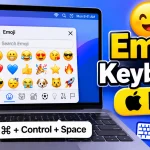
| Mac | Press Control + Command + Space and search “cross mark” |
| Linux | Press Ctrl + Shift + U, type 274C, then Enter (many GTK apps) |
| Microsoft Word | Type 274C, then press Alt + X |
| Slack, Discord, GitHub | Type :x: |
For websites and code:
| Method | Code |
|---|---|
| HTML entity | ❌ or ❌ |
| CSS | content: "\274C"; |
| JavaScript / JSON | "\u274C" |
| Python | "\u274c" |
Pasting the emoji directly into HTML works as long as the page uses UTF-8 (<meta charset="UTF-8">). Windows Alt codes don’t work for emoji, so use the emoji panel instead.
How to Use the X Emoji
- Texting: decline, correct, or cancel quickly. “Dinner at 8? ❌ Can’t make it, sorry!”
- Social media: myth-busting, “don’t do this” tips, and before-and-after posts. “Skipping breakfast ❌ Drinking water first ✅”
- Work chats: flag a blocker or a rejected item. “Design approval ✅ | Budget sign-off ❌”
- Education: mark incorrect answers or build true/false activities.
- Marketing: “do vs. don’t” graphics and comparisons.
- Apps and sites: error messages and failed validation. “❌ Payment failed. Please try again.”
Best practices
- Pair it with a few words so the meaning is clear.
- Balance it with ✅ so the tone stays helpful.
- Use one ❌ per point; a string of them reads as aggressive or spammy.
- In formal emails or client messages, write “not approved” or “unavailable” instead.
X Emoji vs Check Mark Emoji (❌ vs ✅)
The two are opposites and work best as a pair in pros-and-cons lists, myth-versus-fact posts, feature tables, and quizzes.
| ❌ Cross Mark | ✅ Check Mark Button | |
|---|---|---|
| Meaning | No, wrong, rejected, cancelled | Yes, correct, approved, done |
| Unicode | U+274C | U+2705 |
| Color | Red | Green |
| Tone | Firm or cautionary | Positive or reassuring |
Red and green work as “stop” and “go” in many places, but not everywhere, and they’re hard to tell apart for people with red-green color blindness. Don’t rely on color alone; add a word such as “yes” or “no.”
X Emoji and the X (Twitter) Logo
Twitter was renamed X in July 2023, which is why many searches for “X emoji” now mean the logo. There is no official X logo emoji, because Unicode doesn’t create emoji for individual brands.
The closest match is 𝕏 (Mathematical Double-Struck Capital X, U+1D54F), a math letter approved in Unicode 3.1 in 2001. It’s a text character, not an emoji, so most platforms show it in black and white. It also isn’t an exact copy of the logo, and some fonts and apps don’t display it. In HTML you can write it as 𝕏.
On X itself, mobile apps stopped using Twemoji in February 2023 and now show each device’s native emoji, while Twemoji artwork remains on the website.
Cultural and Regional Differences
- Japan: a circle (⭕, maru) means correct and a cross (❌, batsu) means incorrect. Both are so common that they have their own emoji.
- Check marks: in Japan, a check mark in graded schoolwork can mean “incorrect,” so ✅ may not read as positive in exam contexts.
- Western countries: a check mark means correct and an X means incorrect, though teachers’ marking habits vary.
- Forms and ballots: an X often means “I choose this.” A ❌ next to an option can read as a selection, not a rejection.
When writing for an international audience, add a short text label such as “Yes,” “No,” or “Not available.”
Accessibility and Screen Readers
Screen readers read an emoji’s official name, so ❌ is typically announced as “cross mark,” while ✖️ may be read as “multiply.” A string like ❌❌❌❌❌ is announced five times, which is tiring to hear.
- Put the meaning in words, and add the emoji after them.
- Don’t use ❌ and ✅ as the only status signal in a table.
- Hide purely decorative emoji with
aria-hidden="true", and give meaningful ones a label such asaria-label="Not available". - Keep to one emoji per item in lists.
Related Emojis
| Emoji | Name | Best for |
|---|---|---|
| ✅ | Check Mark Button | Yes, approved, completed |
| 🚫 | Prohibited | Rules and bans (“no spoilers”) |
| ⛔ | No Entry | Restricted access |
| 🙅 | Person Gesturing No | A personal “no way” |
| ⭕ | Hollow Red Circle | Correct (in Japan), a highlighted choice |
| 🛑 | Stop Sign | Urgent stop messages |
| ⚠️ | Warning | Caution, not rejection |
Common Mistakes
- Mixing up ❌ and ✖️. Search for “cross mark” to get the red one.
- Sounding harsh. A lone ❌ in reply to an idea feels dismissive, so add a reason.
- Assuming it looks the same everywhere. Designs differ by platform.
- Forgetting it can mean “selected” on forms and ballots.
- Overusing it. One per point is enough.
- Using it in formal messages. Use words instead.
Fun Facts
- ❌ was added to Unicode in 2010, in version 6.0.
- It sits in the Dingbats block, which draws mostly on Hermann Zapf’s Zapf Dingbats font.
- Its text look-alikes (✕ ✖ ✗ ✘) are older: they date to Unicode 1.0 in 1991.
- Its keywords include “multiplication” and “multiply.”
Frequently Asked Questions
What does the red X emoji mean?
❌ means “no,” “wrong,” “cancelled,” or “not allowed,” depending on context. In a quiz it marks a wrong answer; in a comparison table it shows a missing feature.
What is the difference between ❌ and ✖️?
❌ is the red Cross Mark and shows as a color emoji by default. ✖️ is the Heavy Multiplication X, usually dark, used for “multiply” or “close.”
What is the Unicode for the X emoji?
U+274C, named Cross Mark. In HTML, write ❌ or ❌.
How do I type the X emoji?
Open your emoji keyboard and search “cross mark,” press Windows + . on Windows or Control + Command + Space on Mac, or copy and paste ❌.
Is there an official X (Twitter) emoji?
No. The closest option is the text character 𝕏, which isn’t an emoji. Many people use ❌ or the letter “X” instead.
Does ❌ mean “no” in every context?
Not always. On forms and ballots an X can mean “I choose this,” and in Japan ❌ is paired with ⭕ for wrong and correct answers. A text label avoids confusion.
Why does the X emoji look different on my phone?
Each platform draws its own artwork for the same Unicode character. A plain black symbol usually means you have ✖️ or another look-alike.
Can I use the X emoji in professional emails?
It’s better avoided in formal emails and client messages. Write “not approved” or “unavailable” instead; in internal chats, ❌ with a short reason is usually fine.
Conclusion
The x emoji ❌ is tiny but does a lot of work: it says “no,” “wrong,” “cancelled,” or “not allowed” at a glance. Choose ❌ over look-alikes like ✖️ when you mean “no,” pair it with a short label so every reader gets the meaning, and balance it with ✅ to keep your tone helpful.

Hi, I’m Benjamin Dreyer. 😊 I enjoy exploring the world of emojis and digital communication, making emoji meanings and expressions simple to understand. At Defineexa.com, I write about emojis, their meanings, text abbreviations, acronyms, and internet slang. My goal is to provide clear, accurate, and easy-to-read explanations that help readers understand what different emojis and online expressions mean, how they’re used, and how they can communicate with confidence in everyday conversations. 💬