The Palestine flag emoji 🇵🇸 is one of the most recognized flag emojis on messaging apps and social media. It takes one tap to send, yet it can carry layers of meaning, from national identity and cultural pride to solidarity and awareness. Because emojis are so compact, the same symbol can mean different things depending on who uses it, where, and why.
In this guide, you’ll learn what the 🇵🇸 emoji represents, how it works in Unicode, the history of the flag itself, how people use it, how it looks on different devices, and how to type it. Whether you’re curious about its meaning or just want to use it thoughtfully, this guide covers it.
Quick Facts About the Palestine Flag Emoji
Emoji Details
- Emoji: 🇵🇸
- Official name: Flag: Palestinian Territories
- Category: Flags → Country Flag
Technical Snapshot
- Unicode codepoints: U+1F1F5 U+1F1F8
- Built from: Regional Indicator Symbol Letters P and S
- Approved: 2015
- Skin tones / ZWJ: None
What the Palestine Flag Emoji Means
The Literal Meaning
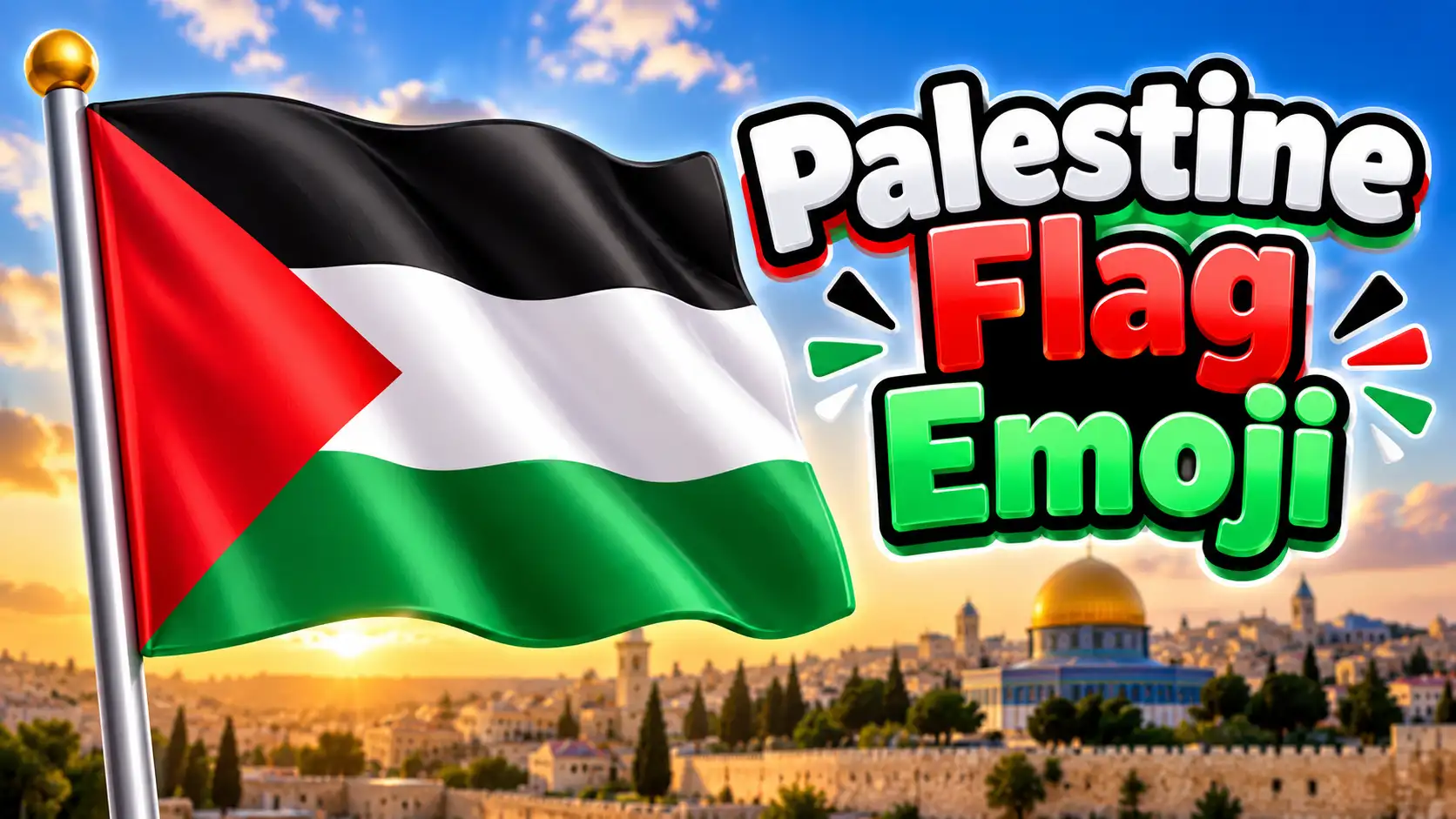
Literally, 🇵🇸 is the flag of Palestine, showing black, white, and green stripes with a red triangle on the left.
Everyday Meanings
In everyday use, people give it several meanings:
- Heritage and identity: Palestinians and people of Palestinian descent use it in bios and posts about family, food, and traditions.
- Solidarity and support: Many use it to express support for Palestinians, whether for humanitarian or political reasons.
- News and awareness: It appears in headlines, threads, and fundraising posts.
- Geographic reference: Some people simply use it to mention a place, trip, or person’s origin.
Why Context Matters
The same emoji can signal heritage from one person and advocacy from another. Surrounding text, hashtags, the platform, and the audience all shape how it is read.
How the Emoji Works Technically
Regional Indicator Symbols
The 🇵🇸 emoji is not a single character. It is a flag sequence that combines the Regional Indicator Symbols P and S, which display as one emoji on supported platforms. The letters come from ISO 3166-1, the standard that assigns two-letter codes to countries and territories, which is why every country flag works the same way.
Why It’s Called “Flag: Palestinian Territories”
The official Unicode name follows Unicode’s standardized naming data tied to the code PS. It doesn’t change how people refer to or use the emoji.
Release Date
The emoji was approved in 2015. Some sites list 2010 because regional indicator letters first appeared in Unicode 6.0 that year, so confirm the details on Unicode.org or Emojipedia before quoting them.
Why You May See “PS”
If you see the letters “PS” instead of a flag, your system doesn’t render flags. This is common on Windows. It is a display limitation, not an error, and the recipient may still see the flag.
Encoding Reference
UTF-8 is F0 9F 87 B5 F0 9F 87 B8, HTML is 🇵🇸, and JavaScript is \u{1F1F5}\u{1F1F8}.
How to Type the Palestine Flag Emoji
On iPhone and Android
- iPhone and iPad: Open the emoji keyboard, search “Palestine,” or browse the Flags section.
- Android: Tap the emoji icon in Gboard or your keyboard, then search or open the Flags tab.
On Windows and Mac
- Windows: Press Windows key + period (.) to open the emoji panel and search.
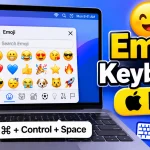
- Mac: Press Control + Command + Space to open the Character Viewer.
Shortcodes and Copy-Paste
Some apps like Slack, Discord, and GitHub support text shortcodes, but they vary by platform, so test them first. The quickest method is to copy 🇵🇸 from this page.
History of the Palestinian Flag
Origins in the Arab Revolt
The emoji shows a flag older than the modern Palestinian national institutions. The flag used by Palestinian nationalists in the first half of the 20th century was the flag of the 1916 Arab Revolt, an uprising against Ottoman rule. Its precise origins are subject to dispute and legend, so it’s best to describe them carefully.
Meaning of the Colors
The colors are the Pan-Arab colors, shared with flags such as Jordan’s. A widely repeated explanation is that the black, white, and green stripes represent three caliphates that ruled the Arab world. Interpretations vary, so treat this as a traditional reading.
Official Adoption
- 1948: The All-Palestine Government adopted the flag, and the Arab League recognized it as the flag of Palestine.
- 1964: The Palestine Liberation Organization (PLO) adopted it. Sources give different dates, including 28 May and 1 December.
- 1988: The PLO adopted the flag as the flag of the State of Palestine on November 15.
How the Emoji Entered Digital Culture
From Standard Emoji to Everyday Symbol
The 🇵🇸 emoji arrived with the 2015 country flag set and became part of how people share identity online. Its profile rose sharply during the conflict that followed October 2023, when several incidents drew attention.
The Watermelon Emoji and Algospeak
Many users also turned to the watermelon emoji 🍉. Watermelon images have become a code for pro-Palestinian activism on Instagram and TikTok, used in place of the flag or as a stand-in for words like “Palestine” or “Gaza.” The reason is the colors, since the watermelon emoji is red, green, and black like the flag. The watermelon emoji was introduced in 2015, and its use surged during an escalation in the conflict in 2021. This kind of coded wording is often called algospeak. The trend also drew pushback, with some commenters responding with accusations or counter-symbols.
Common Ways People Use the Emoji
Everyday Use Cases
- Heritage posts: “Proud of my roots 🇵🇸”
- Culture and food: “Learning tatreez this winter 🇵🇸🧵”
- Solidarity: “Sharing relief resources 🇵🇸”
- News and education: “Reading list for anyone who wants to learn more 📚🇵🇸”
- Sports and events: “Cheering for the national team 🇵🇸⚽”
Popular Emoji Combinations
Popular pairings include 🇵🇸🕊️ for peace, 🇵🇸🌍 for global awareness, 🇵🇸📰 for news, and hearts in the flag’s colors. Their meanings overlap and change with context.
Platform and Design Differences
Why Designs Differ
Unicode sets the code, but each company draws its own artwork. The code point stays the same, but each platform’s visual design can differ. Apple, Google, Samsung, Meta, and X may vary in wave, shading, color shade, and triangle proportions.
Consistent Display on Websites
For websites, an emoji font such as Noto Color Emoji or Twemoji gives consistent results across devices, as long as you follow its license.
Controversy and Moderation
What Meta Has Said
Flag emojis sit where identity, politics, and platform rules meet. In October 2023, Meta confirmed that it hides comments containing the Palestinian flag emoji in certain “offensive” contexts that violate its rules, pointing to its policy on dangerous organizations. Meta also said it has no policy specific to the emoji. Separately, an Instagram translation bug rendered some Palestinian users’ bios as “Terrorist,” and Meta apologized.
What Critics Say
Critics and digital rights groups argue that it remains unclear how Meta decides whether a use of the emoji is offensive, and that the flag has no formal association with Hamas and predates the group by decades. Platforms say enforcement depends on context. The debate continues, and policies change, so check each platform’s current rules. I found no evidence of a universal ban on the emoji.
Etiquette and Practical Tips
Be Clear and Know Your Audience
- Make your intent clear. Add a few words, such as “Celebrating Palestinian culture 🇵🇸.”
- Know your audience. Friends, public followers, and colleagues may react differently.
- Watch your combinations. Other emojis change how the flag reads.
Follow Platform Rules and Respect Others
- Check platform and workplace rules before posting in official channels.
- Respect other people’s experiences. Avoid mocking or generalizing about any group.
- Don’t assume. Seeing the emoji in someone’s profile doesn’t tell you all their views.
- If a post is wrongly restricted, use the platform’s appeal option.
Frequently Asked Questions
Why is it called “Flag: Palestinian Territories”?
Unicode uses standardized region names tied to the code PS.
Why do I see “PS” instead of a flag?
Your device or app doesn’t render flag emojis, which is common on Windows.
Is the emoji banned?
There are reports of moderation disputes, mainly on Meta platforms, but no universal ban.
Does it have skin tone options?
No.
Can I use it on my website?
You can use the text emoji. For consistent images, use an emoji set with a license that allows it.
Conclusion
The Palestine flag emoji 🇵🇸 is a small symbol with technical, historical, and cultural layers. It is built from two letters, it draws on a flag rooted in the 1916 Arab Revolt, and it looks different on every platform.
People use it for heritage, solidarity, and awareness, and its meaning shifts with the speaker and the setting. A little context, a check of the platform’s rules, and thought for your audience go a long way.

Hi, I’m Benjamin Dreyer. 😊 I enjoy exploring the world of emojis and digital communication, making emoji meanings and expressions simple to understand. At Defineexa.com, I write about emojis, their meanings, text abbreviations, acronyms, and internet slang. My goal is to provide clear, accurate, and easy-to-read explanations that help readers understand what different emojis and online expressions mean, how they’re used, and how they can communicate with confidence in everyday conversations. 💬